
Exercise and Insulin Pumps
Contents
Advice for insulin pump users
One of the attractions of insulin pumps is the flexibility they allow, particularly around exercise.
Generally, the things to think about are similar whether you are on injections or a pump. However, there is specific advice on how you run your pump around exercise which is covered in this section.
BEFORE EXERCISE
Bolus Insulin
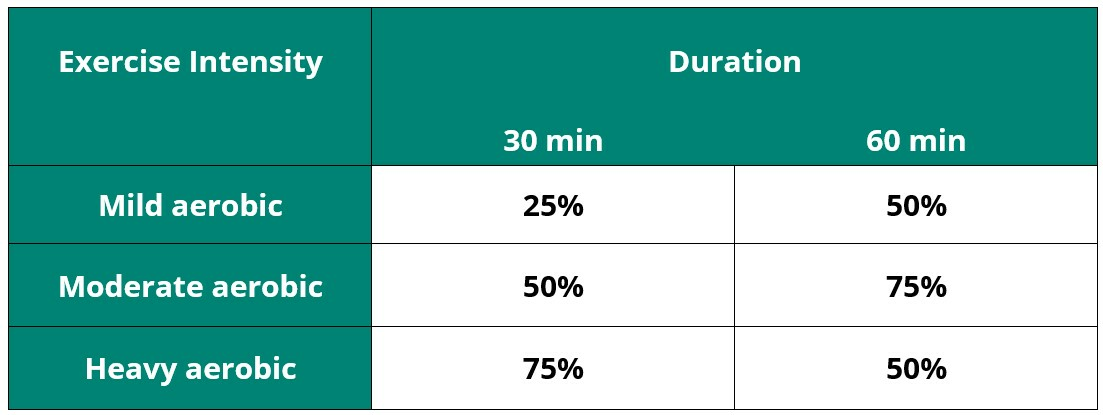
if you do aerobic exercise less than 90 minutes after a meal:
- REDUCE bolus insulin by 25-75%
- A 50% reduction is a good place to start
- you can vary the reduction depending on the intensity and duration of exercise
See the table below:
BASAL Insulin
The amount you reduce the basal rate by depends on the intensity and duration of the exercise and varies from individual to individual.
- REDUCE 60-90 minutes prior to activity AND during activity
- REDUCE by 50-80%
- 50% reduction is a good place to start.
Note – if doing short periods of anaerobic activity, you don’t need to make any changes to your basal or bolus insulin.
DURING EXERCISE
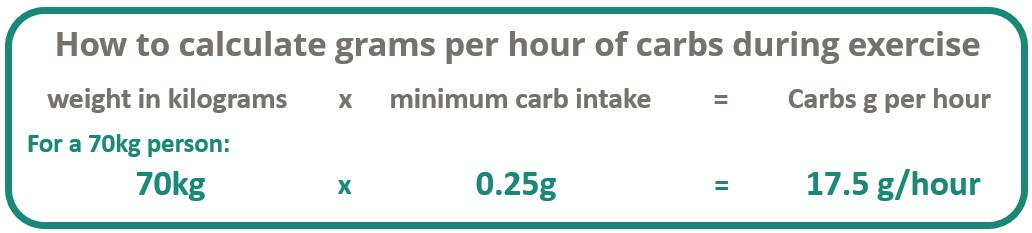
The best strategy is a combination of REDUCED BASAL RATE (as above)AND EXTRA CARBOHYDRATE.
- You should aim to take 0.25g to 0.5g of carbohydrate per kilogram body weight per hour.
- It is best not to take all the carbohydrate in one go, but to take some extra carbohydrate every 20 minutes during exercise.
AFTER EXERCISE
Bolus Insulin
- 50% REDUCTION in boluses for the TWO meals after exercise
e.g. if you exercise in the afternoon, you reduce your quick-acting insulin with both your evening meal AND your breakfast the following day.
- 50% REDUCTION in correction boluses for 12 hours after exercise
BASAL Insulin
- At end of activity – return to NORMAL rate
- Bedtime - 20% REDUCTION for 6 hours if:
Exercising after 4pm
Over 2 hours of exercise
High intensity interval training (HIIT) at any time of the day
New form of exercise for you
PUTTING IT ALL TOGETHER
The following examples illustrate how you can put the advice above into practice. These are places to start and you may well need to make changes based on your experience or the more detailed suggestions above. Your diabetes team can support you.
MORNING EXERCISE
If you do your usual exercise in the morning and exercise for less than 2 hours.
Boluses
Before exercise
After exercise
- 50% REDUCED BOLUS with lunch AND evening meal
- 50% REDUCED correction boluses for 12 hours
BASAL RATE
|
60 to 90 minutes BEFORE exercise |
- |
REDUCE basal rate (50 - 80%) |
|
DURING exercise |
- |
REDUCE basal rate (50 – 80%) |
|
On STOPPING exercise |
- |
Return to NORMAL rate |
AFTERNOON/EVENING EXERCISE
If you exercise after 4pm but before your evening meal.
Boluses
Before exercise
After exercise
- 50% REDUCED BOLUS with evening meal AND breakfast
- 50% REDUCED correction boluses for 12 hours
BASAL RATE
|
60 to 90 minutes BEFORE exercise |
- |
REDUCE basal rate (50 - 80%) |
|
DURING exercise |
- |
REDUCE basal rate (50 – 80%) |
|
On STOPPING exercise |
- |
Return to NORMAL rate |
|
On GOING TO BED |
- |
20% REDUCED rate for 6 hours |
GENERAL EXERCISE TIPS FOR PUMP USERS
Pre-Exercise Hyperglycaemia
Some people find that their sugar runs high just before exercise. This is particularly true before competitive matches or big events. There are various options for keeping the sugars controlled.
Drink plenty of water – good hydration will help
Use a low intensity warm-up – low-intensity aerobic exercise alone will help control glucose
Correction boluses
- be cautious as there is a risk of hypoglycaemia once you start exercise
- reduce the correction bolus by 70%
- don’t give more than one correction as the insulin will stack UP
PUMP REMOVAL
Generally, it is better to keep the pump on and reduce the insulin as above rather than taking the pump off altogether when you do exercise
However, there are some sports (e.g. watersports, contact sports, martial arts) for which you will have to take the pump off.
General Advice on Pump removal
- Pumps should not be taken off for more than 1 hour
- Missed basal insulin (i.e. the basal insulin that you would have had during the time the pump is off) can be given as a bolus either before activity, if you are doing anaerobic activity, or after putting the pump back on if you are doing aerobic exercise.
Note - If you have done aerobic activity, you will need to REDUCE the bolus:
- calculate the amount of basal insulin you would have had during the activity
- REDUCE that amount by 50-80%
- give as a bolus
e.g. if you would have had 4 units of basal insulin during the activity, give a bolus of 2-3 units at the end (50-80% of 4 units).